LES ALTERNATIVES DE GESTHA

Moltes d'aquestes propostes podrien aplicar-se en el termini d'un any.

CUANDO QUEDAS ATRAPADX EN LA DESTRUCCIÓN, DEBES ABRIR UNA PUERTA A LA CREACIÓN. Anaïs Nine

Es de las crisis que nacen la inventiva, los descubrimientos y las grandes estrategias. Albert Einstein

INTERFERÈNCIES

Los diputados del pueblo no son sus representantes, sólo son sus comisarios. Las leyes que el pueblo mismo no ratifica no tienen validez, son leyes nulas. Jean-Jacques Rousseau

HOME: EL NOSTRE PLANETA

Si no somos dueños de la frescura del aire, ni del brillo del agua, ¿Cómo podrán ustedes comprarlos? Gran Jefe Seattle

EL ACONTECIMIENTO #15M

No me fio de la incomunicabilidad, es la fuente de toda violencia. Jean-Paul Sartre

Es mostren els missatges amb l'etiqueta de comentaris nacionalisme. Mostrar tots els missatges

dijous, 27 de febrer del 2014

Algunas claves para comprender qué pasa en Ucrania

El artículo que reproducimos a continuación, publicado en el blog Principia Marsupia, desvela algunas de las claves para comprender qué está pasando en Ucrania, un conflicto cuya singularidad ha dificultado su comprensión desde el inicio de los levantamientos populares, enturbiando el discernimiento de sus causas y poniendo de relieve lo  injustificado de los sucesos de extrema violencia con los que se ha saldado esta "revolución", así como lo incomprensible de su rápido desenlace. Si quieres profundizar en el tema, te recomendamos los artículos que sobre estos acontecimientos han sido publicados, también, en Principia Marsupia  
La administradora del blog

6 datos para entender Crimea, pieza clave del conflicto en Ucrania

Tras lo ocurrido durante la última semana en Kiev, el foco del conflicto en Ucrania se traslada a Crimea. Lo que ocurra en esta región será determinante: ¿puede degenerar la situación en una guerra civil? ¿Intervendrá Putin militarmente? ¿Seguirá Ucrania siendo un país o camina hacia la secesión?

Algunos datos para comprender Crimea:

1) A pesar de formar parte de Ucrania, la mayoría de los ciudadanos de Crimea son de origen ruso. Según el último censo nacional de 2001, la composición de la población es la siguiente: rusos 58%, ucranianos 32%, tártaros 10%.

2) En Sebastopol, la ciudad más importante de Crimea, Rusia tiene la base de su flota del Mar Negro. Según el último acuerdo firmado con el gobierno ucraniano, Rusia mantendría ese puerto hasta, al menos, 2042. “Rusia jamás, jamás, jamás abandonará Sebastopol” decía hace dos años Igor Kasatonov, comandante de la Flota Rusa del Mar Negro. Por razones geoestratégicas, Rusia no está dispuesta a perder la base de Sebastopol.

3) Dentro de Ucrania, Crimea es una región autónoma con su propia constitución. En las últimas elecciones presidenciales, Crimea votó mayoritariamente por Yanoukovich, el presidente que tuvo que huir hace unos días de Kiev.

4) Los tártaros constituyeron durante siglos la mayoría de la población de Crimea. En la Segunda Guerra Mundial, unos 20.000 tártaros colaboraron con el ejército nazi (mientras otros muchos miles luchaban en las filas del ejército soviético). Stalin acusó a todo el pueblo tártaro de “colaboracionismo” y en mayo de 1944 ordenó su deportación a las estepas de Uzbekistán. En 1947 ya no había tártaros en Crimea. Tras la caída de la Unión Soviética, muchos tártaros han regresado desde Uzbekistán a Crimea.
Gráfico: Evolución de la población en Crimea vía BBE (Verde=tártarxs, Rojo=rusxs, Amarillo=ucranianxs).


5) Crimea, con su mayoría tártara, formó parte de Rusia desde 1774. En 1954 Nikita Kruchev transfirió Crimea a la República Socialista Soviética de Ucrania. La decisión resultó muy polémica en Moscú: en su carrera como político, Kruchev había ascendido a través de las filas del Partido Comunista Ucraniano.

6) En una encuesta realizada hace dos años dentro de Rusia, el 70% de los ciudadanos rusos consideran Crimea como parte de su país. En comparación, sólo el 30% considera que Chechenia es parte de Rusia. (Curiosamente Chechenia sí es parte de la Federación Rusa mientras Crimea forma parte de Ucrania).

Durante los últimos días, la mayoría rusa de Crimea ha salido a la calle para protestar contra el gobierno recién instalado en Kiev, que consideran ilegítimo. Exigen un referéndum donde puedan decidir si Crimea: a) sigue formando parte de Ucrania, b) se integra en Rusia o c) declara su independencia.

Por contra, las minorías ucraniana y tártara apoyan al nuevo gobierno de Kiev y exigen seguir integrados en Ucrania.

dijous, 21 de març del 2013

EL POBLE KURD CELEBRA EN DIVERSOS PAÏSOS DEL MÓN EL NEWROZ, L'ANY NOU, QUE COINCIDEIX AMB L'ARRIBADA DE LA PRIMAVERA, AMB DECLARACIONS D' ALTO EL FOC EN UNA GUERRA QUE AFECTA A 15 MILIONS DE PERSONES


Newroz, which means "new day" in Kurdish, marks the arrival of spring.

Amid Newroz celebrations in Turkey, Kurdish leader Abdullah Ocalan issued a long-awaited ceasefire declaration in the country.


Kurdish public celebrations were illegal in Turkey until 2000


Newroz, which falls on March 21, is also celebrated in Afghanistan, Azerbaijan, Iran and Tajikistan.


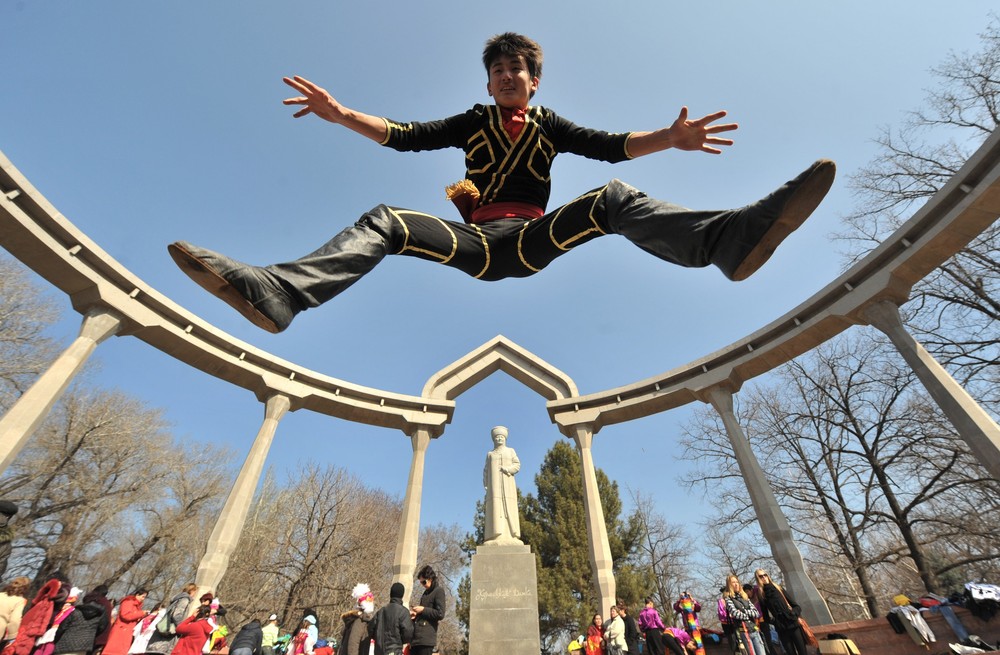
Wearing their traditional costumes, Kyrgyz girls dance at the Ala-Too Square in Bishkek.


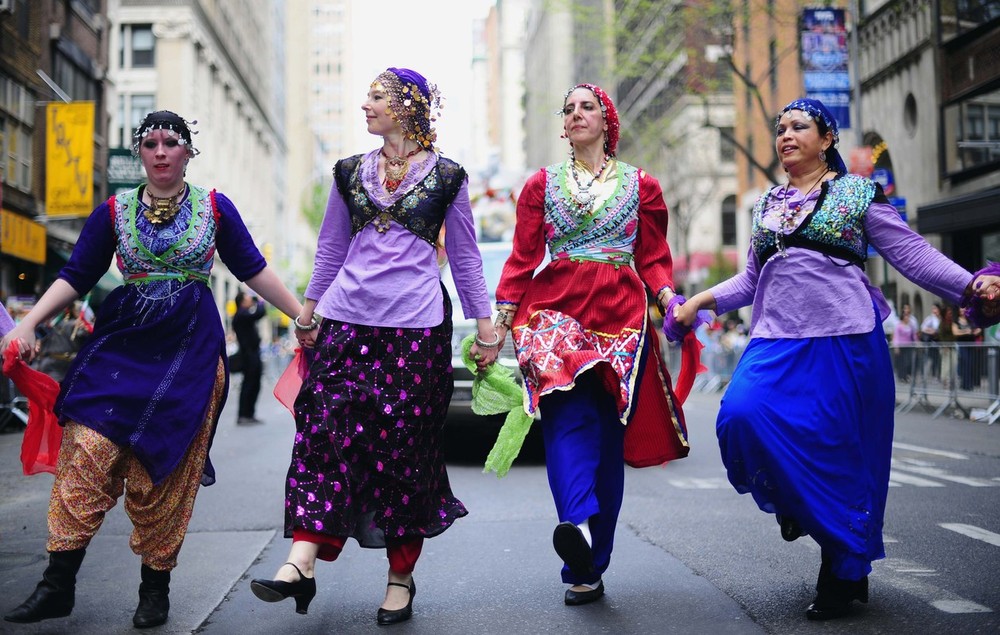
A parade was held in New York in commemoration of Newroz.


Demonstrators wave pro-Kurdish Peace and Democracy Party flags during a rally to celebrate the spring festival in Istanbul.


Contingut publicat a

PKK leader calls for ceasefire in Turkey

Abdullah Ocalan, the jailed Kurdish rebel leader, has issued a long-awaited ceasefire declaration that would be a major step towards ending a 30-year conflict that has cost around 40,000 lives in Turkey.
The ceasefire, announced on Thursday and which coincides with the Kurdish New Year, or Newroz, also calls for the withdrawal of PKK likely to bases in northern Iraq.

Recep Tayyip Erdogan, the Turkish prime minister, said the ceasefire call was a "positive development".

"There are groups that are fed by terror in our country. This process will ruin their game." he said, speaking during a visit to the Netherlands.

In Ocalan's letter, read out by members of parliament, Pervin Buldan, in Kurdish, and Sirri Sureyya Onder, in Turkish, the PKK leader said: "Let guns be silenced and poltics dominate.

"The stage has been reached where our armed forces should withdraw beyond the borders ... It's not the end. It's the start of a new era."

The statement was read out to a sea of red-yellow-green Kurdish flags, in the Kurdish-majority city of Diyarbakir, where hundreds of thousands gathered for celebrations.

Erdogan expressed his disappointment because there were no Turkish flags at the Newroz celebrations in Diyarbakir.

"This is a provocative approach by the circles who wants to influence the process in a negative way," he said.

Ocalan's ceasefire is likely to be in return for wider constitutional recognition and language rights for Turkey's up to 15 million Kurds.

The peace plan is the result of written consultations between Ocalan, pro-Kurdish legislators and PKK bodies in Europe and northern Iraq, under the close monitoring of Turkish agents.

Kurdish legislators say Ocalan might ask for commissions to be established to properly monitor the ceasefire, and call for safe passage for fighters wishing to leave Turkey.

'Political career'

Erdogan and Ocalan both appear to have staked their political futures on the renewed push to end the conflict.

Al Jazeera's Zeina Khodr, reporting from Diyarbakir, said Erdogan had made no secret that he was eyeing the presidency.

"He will need to amend the constitution and would like to increase the powers of the president. He can not do that without the support of the Kurdish party, the BDP."

Erdogan said he was putting his faith in the peace process "even if it costs me my political career", in the face of accusations that Ankara was making concessions to Ocalan.

Ocalan, known as "Apo," has said he wants peace for the greater good of his people.

"Consider Apo dead if this process fails. I am simply out," the burly 64-year-old was quoted as saying in a rare prison meeting with Kurdish legislators last month.

Hard road ahead

If a ceasefire holds, the path to disarmament, and the reintegration of PKK fighters, will still be long and vulnerable to sabotage.

The fate of Ocalan also remains uncertain, but any move to release him would be strongly opposed by critics who see any settlement as threatening Turkish unity.

The prospect of talks with the PKK has outraged many Turks who revile Ocalan and hold him personally responsible for the bloodshed.
Informació publicada a ALJAZEERA